Tooth-Colored Fillings
Advances in materials and technology have changed a lot about the way we approach dental treatment. In the past, dental fillings were strictly restorative because they were either made of silver amalgam or a flat-looking white material.
Today, at Buxton Family Dental, we use tooth-colored composite fillings because they create a durable repair while also enhancing the appearance of your smile.
Composite fillings are made of glass and resin particles, giving the material a natural, somewhat translucent appearance. We can shape and shade composite resin to create a natural-looking repair that blends seamlessly with your smile.
Protecting Your Healthy Smile
It’s ironic, but the goal of dentistry is to have you see us routinely so you don’t have to see us as often! Semi-annual exams and cleaning appointments are your best defense against dental decay because they allow us to monitor your oral health on an ongoing basis.
When you keep your routine appointments, we can stay current with decay that may be developing and treat it before it becomes a significant problem that is involved and costly to treat.
The Benefits of Tooth-Colored Fillings
At our Fort Collins dental office, we only place tooth-colored composite fillings. We understand that many patients prefer not to have amalgam (silver) fillings because of concerns about mercury.
But we also choose composite fillings because the material can be custom color-matched to blend with the natural shade of your teeth. Additionally, dental composites are easy to work with, allowing Dr. Kendell Buxton to recreate the shape of your tooth or change its appearance for a more harmonious smile.
Another benefit is that composite fillings are a healthier choice than amalgam. To place an amalgam filling, a dentist would typically need to remove extra healthy structure to fill the cavity. But the process for placing composite fillings allows us to remove only the damaged part of a tooth to restore its function and appearance.
Perfecting Your Smile with Cosmetic Dental Bonding
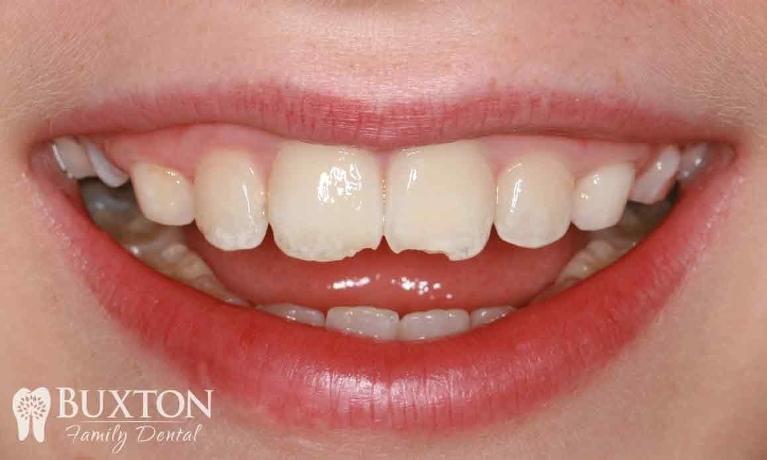
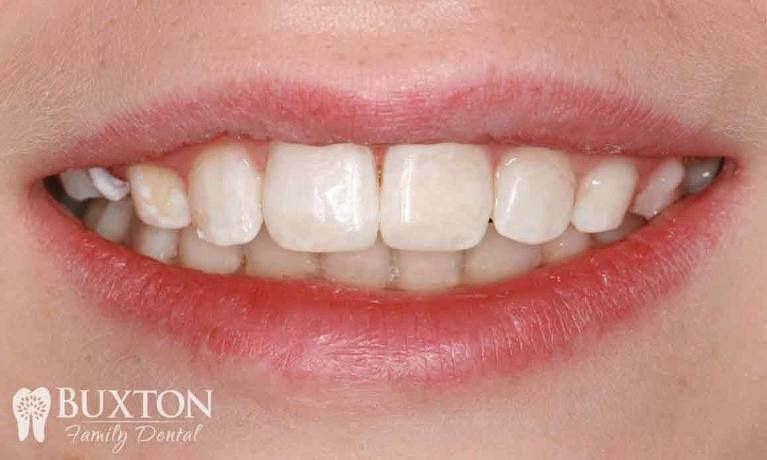
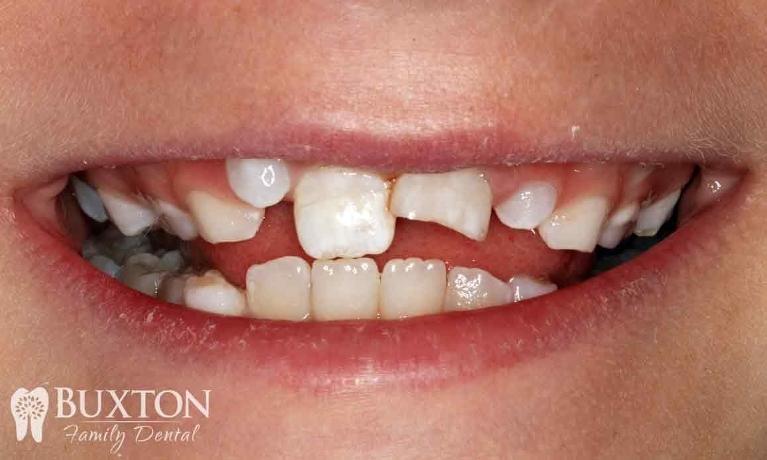
Because of the esthetic nature of tooth-colored fillings, Dr. Buxton also uses the material for a process called cosmetic dental bonding. This process involves expertly building up portions of a tooth to conceal chipped or broken teeth, fill in uneven gaps and spaces between teeth, and even hide the discoloration of a severely stained tooth.
If you have been thinking about veneers but are put off by the cost, we will be happy to talk to you about choosing bonding instead. Since we can customize the color and shape of the material, we can often create similar esthetic results without multiple visits or the expense of veneers.
Please Call to Arrange an Appointment
If you want to achieve your healthiest smile, the best place to start is with a visit to our Fort Collins dental office. We will talk to you about your concerns, evaluate your needs, and make recommendations to restore your smile.
Frequently Asked Questions
A great smile can have a huge impact on your life. There are various ways to improve the color, shape or alignment of your teeth. Here are a few of the treatment options we offer here at Buxton Family Dental.
Teeth Whitening: Do your teeth seem naturally darker than other people's teeth? Have your teeth turned a darker color over the years? Do "whitening" toothpastes not seem to have any effect? This is often solved with a simple professional whitening treatment. Learn more about how we can brighten your smile here.
Bonding: If your teeth are minimally chipped, damaged or needing reshaped, cosmetic bonding is the quickest, most affordable and most conservative option. Using tooth-colored filling material your front teeth can be improved in just one visit.
Veneers: Veneers are more expensive, require removal of more tooth structure and take more time, but the result is a life-like, long-lasting smile. Veneers are custom made out of ceramic by a dental lab and replace the outer most layer of your visible teeth.
Crowns: If your teeth have had more significant damage from wear, cavities, etc. the above options may not provide enough strength. Full coverage crowns can achieve your cosmetic goals while reinforcing your teeth at the same time. These too are made by a dental lab and require more than one appointment.
Cavities are caused by the bacteria that live in every human being's mouth. These bacteria thrive on the sugars that you place in your mouth, they then form dental plaque, and these plaques contain the bacteria's acidic byproducts that eat away the surfaces of your teeth. If these softened areas get too large they can break down further or "cavitate". These will continue to grow unless the dental decay is removed and the tooth restored by a dentist. We like to find a cavity when it is small and repair it before there is major breakdown.
Cavities can form on various surfaces of your teeth. Some people are more prone to certain types of cavities than others:
- The most common type of cavity forms in the deep grooves and fissures found on the chewing surfaces of your teeth. Bacteria can easily hide out in these areas and some people struggle to brush them away. This deep grooves are the main reason most dentist's recommend sealants at a young age. These cavities are usually found with a dentist's explorer. Your tooth is made of the hardest substance in the human body so it should feel solid when tested by your dentist. If a soft or sticky spot is found by the explorer this is the most common indication that there is a cavity.
- The next most common type of cavity is found between your teeth. These are cavities prevented by flossing. They usually form when bacteria collect just below the spot where neighboring teeth contact each other. These types of cavities are usually found with our routine bitewing x-rays.
- Another common area to get a cavity is along the gum line. Dental plaque is easily formed along the gum line. On the lingual side (the side of your tooth facing your tongue), plaque formation is less common because it is routinely washed away by your tongue. It is much more common on the buccal side (the side of your tooth facing your lips and cheeks) and special effort must be made to brush it away. These cavities are detected visually or again by running the dental explorer across the tooth surfaces looking for breakdown.
- Another very common type of decay is called recurrent decay. This is decay found along the margins of an existing restoration (a filling, crown, etc.) The margin is where a dental restoration meets your tooth. Microscopic bacteria hide on any ledge, crevice, or crack that they can find and this junction between your restoration and your tooth is an ideal space no matter how well the restoration is done. For this reason it is very important to be mindful of the dental work you have in your mouth and take extra care to maintain it.
If you're concerned that you might have a cavity and would like it evaluated, please give us a call at Buxton Family Dental!
Meet Our Doctor:
Kendell Buxton DDS
Dentist
Dr. Buxton is originally from a small town in Cache Valley of northern Utah. Cache Valley is home to Utah State University, where Dr. Buxton began his undergraduate studies in 1998. After completion of his coursework at USU, he moved to the Midwest, where he earned his dental degree at The Ohio State University College of Dentistry in 2008. Since that time, he has worked in several outstanding private practices in Ohio, New Mexico, and now Colorado.
Dr. Buxton chose Fort Collins as his final destination because of its many similarities ...